The objective of competitor analysis is to identify competitors, evaluate their strengths and weaknesses, and discover opportunities for growth. Everything else is method.
The process I follow
- Research competitor websites
- Review social media presence
- Analyse content strategies
- Compare marketing activities
- Document findings and recommendations
A real example
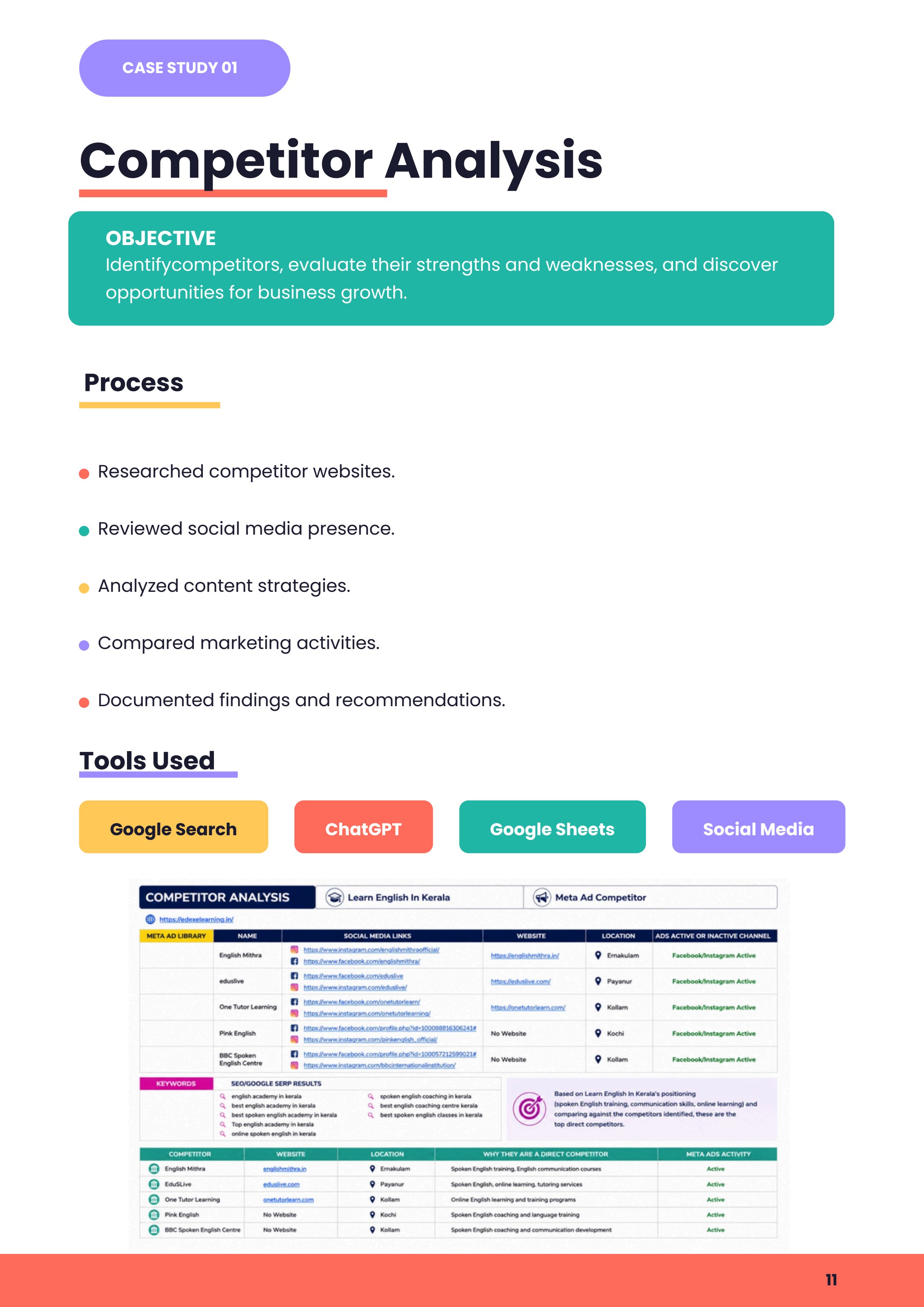
For the 'Learn English in Kerala' market I documented five direct competitors: English Mithra (Ernakulam), EduSLive (Payyanur), One Tutor Learning (Kollam), Pink English (Kochi) and BBC Spoken English Centre (Kollam). All five were running Meta Ads. Two of them — Pink English and BBC Spoken English Centre — had no website at all.
Gaps are the output
That single observation is the value of the exercise. In a market where every competitor is buying attention on Meta but not all of them have a site to send that attention to, a brand that pairs paid social with a properly optimised website has a structural advantage.
Tools used
- Google Search for SERP competitors and keywords
- Meta Ad Library for active ad checks
- Social media profiles for content and posting behaviour
- Google Sheets to hold the comparison
- ChatGPT to structure and summarise findings
Keep the sheet. A competitor analysis is most useful the second time you run it, when you can see what changed.